
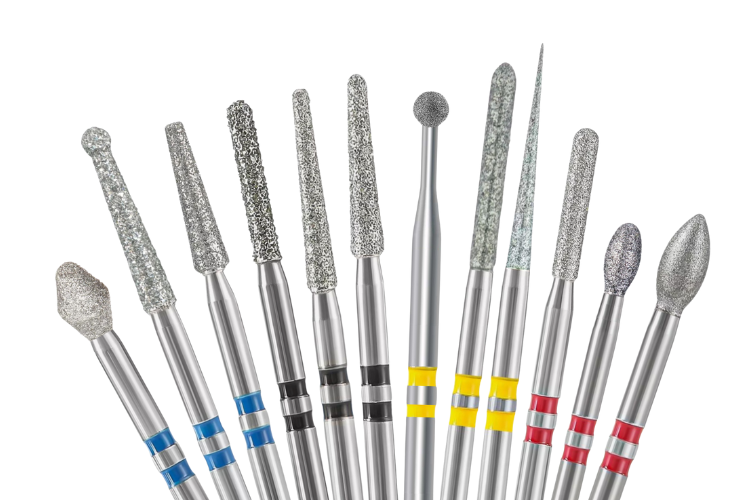
Zirconia ceramic is one of the hardest materials used in modern restorative dentistry. Crowns, bridges, and implant abutments made from zirconia demand cutting instruments that can match its density without sacrificing speed or accuracy. Standard carbide or steel burs wear down quickly on zirconia surfaces, leading to rough margins, longer chair time, and frequent tool replacement. Zirconia diamond burs were developed specifically to solve these problems, and they have become the preferred instrument in practices and labs that handle zirconia restorations daily.
This article explains what makes zirconia diamond burs different from conventional options, compares their performance side by side, and offers practical guidance on selecting the right bur for your workflow.
What Makes Zirconia Diamond Burs Different
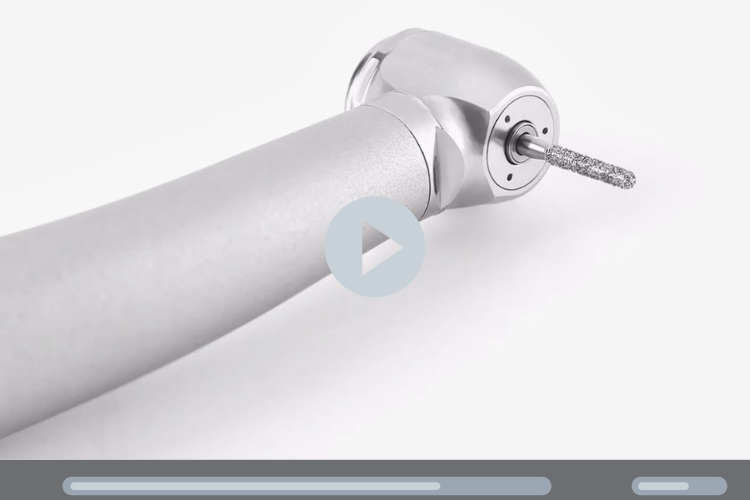
At a basic level, every diamond bur uses abrasive diamond particles bonded to a metal shank. The difference with zirconia-specific burs lies in the engineering details: particle size, coating layers, bond strength, and head geometry are all tuned for the unique properties of zirconia ceramic.
Multi-Layer Diamond Coating
Standard diamond burs typically use a single layer of diamond grit. Zirconia diamond burs feature multiple layers of premium natural or synthetic diamond particles. The additional layers serve two purposes. First, they increase the total abrasive surface area, which translates directly into faster material removal. Second, as the outermost layer wears during use, fresh diamond particles beneath are exposed, maintaining cutting performance over a longer service life.
Optimized Grit Size and Distribution
Zirconia is rated around 1200 on the Vickers hardness scale, considerably harder than most dental ceramics. Burs designed for this material use a coarser grit pattern during roughing and a finer grit for finishing. The particle distribution is engineered to balance aggressive cutting with surface smoothness, reducing the need for secondary finishing passes.
Heat Management
Friction heat is a real concern when cutting dense ceramics. Excessive heat can cause micro-cracks in the restoration, damage pulp tissue in chairside adjustments, and accelerate bur degradation. Zirconia diamond burs address this through open flute designs and efficient chip evacuation channels that allow water spray to reach the cutting surface. The result is lower operating temperatures compared to conventional burs under the same conditions.
Shank Compatibility
Zirconia diamond burs are available in both FG (friction grip) shanks for high-speed handpieces and HP (handpiece) shanks for straight-nose handpieces and lab motors. Selecting the correct shank type is important for proper fit, concentricity, and safe operation at recommended RPM ranges.
Zirconia Diamond Burs vs. Traditional Burs
The table below summarizes key performance differences based on clinical and laboratory testing conditions.
Feature | Zirconia Diamond Burs | Traditional Diamond or Carbide Burs |
|---|---|---|
Material Specificity | Engineered for zirconia ceramic | General-purpose or designed for softer materials |
Diamond Coating | Multi-layered premium diamond particles | Single layer or uncoated (carbide) |
Cutting Speed on Zirconia | High — noticeably faster material removal | Moderate to slow — requires more passes |
Heat Generation | Low — open flute design aids cooling | Higher — risk of thermal micro-cracks |
Tool Life | Extended — multi-layer coating refreshes | Shorter — single layer wears quickly on hard ceramic |
Surface Finish | Smooth — less secondary finishing needed | Rougher — often requires additional polishing |
Cost per Procedure | Lower over time due to longer service life | Higher due to frequent replacement |
Clinical and Laboratory Applications
Zirconia diamond burs are used in both chairside clinical settings and dental laboratory environments. Understanding where each type excels helps practitioners choose the right instrument for the task.
Chairside Adjustments
After seating a zirconia crown or bridge, minor occlusal adjustments are often necessary. A fine-grit zirconia diamond bur in an FG shank allows precise trimming at high speed without removing excess material. The low heat output protects pulp vitality when working near the gingival margin or on thin walls.
Laboratory Milling and Contouring
In the lab, technicians use HP-shank zirconia diamond burs with bench motors and straight handpieces to contour pre-sintered or fully sintered zirconia blanks. For labs running CAD/CAM milling systems, dedicated milling burs handle the initial shaping, while hand-finishing with zirconia diamond burs refines anatomy, contacts, and margins.
Implant Prosthetics
Zirconia abutments and hybrid frameworks require careful adjustment to achieve passive fit. Zirconia diamond burs allow controlled material removal from these high-value components without the chipping or fracture risk that comes with using inappropriate instruments.
Removal of Old Zirconia Restorations
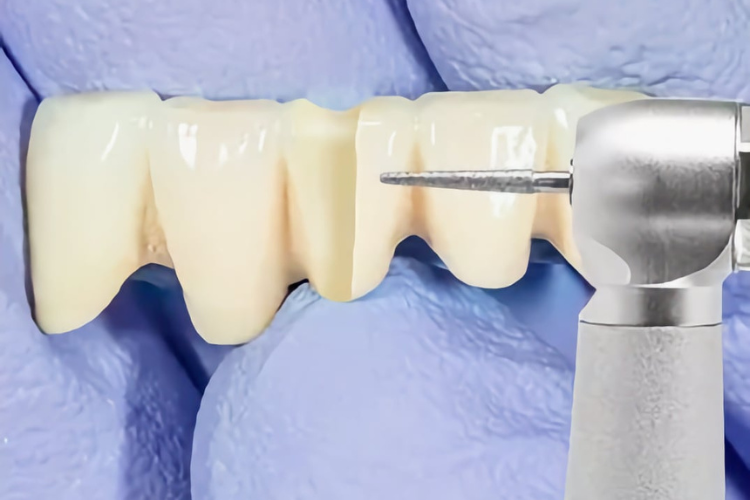
When a zirconia crown or bridge needs to be replaced, sectioning the restoration for removal is one of the most demanding cutting tasks in clinical dentistry. The extreme hardness of fully sintered zirconia can stall conventional burs within seconds. A coarse-grit zirconia diamond bur cuts through the restoration wall efficiently, allowing the clinician to section the unit and remove it without excessive force on the underlying tooth structure or implant connection.
How to Select the Right Zirconia Diamond Bur
Choosing the best bur depends on the specific task, the state of the zirconia (pre-sintered vs. fully sintered), and the handpiece being used. Here are the main selection criteria.
Grit Selection
- Coarse grit (125-150 µm): Bulk reduction and gross contouring of fully sintered zirconia
- Medium grit (100-125 µm): General shaping and adjustment work
- Fine grit (45-75 µm): Margin finishing, occlusal adjustment, and pre-polish smoothing
Head Shape
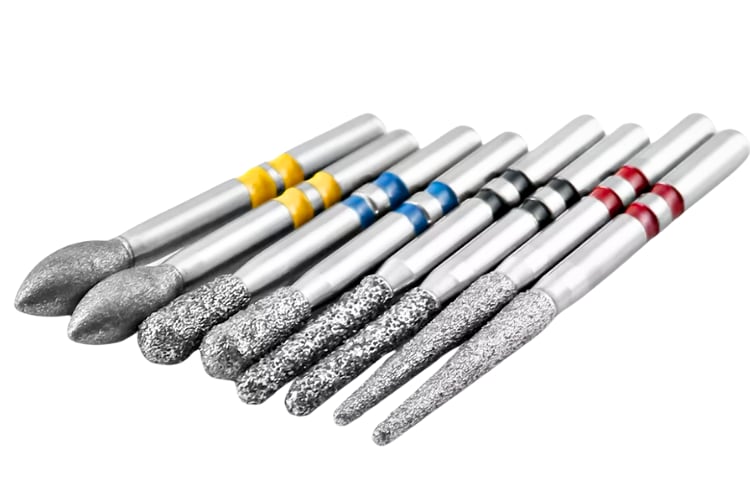
- Flame or needle: Interproximal areas, margin refinement
- Football or egg: Occlusal anatomy, concave surfaces
- Cylinder or barrel: Flat surface reduction, axial wall adjustment
- Round or ball: Internal adjustments, access holes
RPM and Pressure Guidelines
Most manufacturers recommend running zirconia diamond burs between 150,000 and 200,000 RPM for FG shanks and 25,000 to 35,000 RPM for HP shanks. Light, intermittent pressure produces better results than heavy continuous contact. Always use water irrigation to control heat and flush debris. If your handpiece is not performing as expected, check our guide on common dental handpiece problems and solutions.
Maintenance and Lifespan
Even with their extended service life, zirconia diamond burs require proper care to perform at their best.
- Cleaning: Ultrasonic cleaning removes embedded ceramic particles that reduce cutting ability. Avoid wire brushes, which can dislodge diamond particles from the bond matrix. For detailed cleaning protocols, see our article on how to clean dental diamond burs.
- Sterilization: Autoclave at standard 134°C / 273°F cycles. Diamond coatings tolerate repeated sterilization without degradation.
- Inspection: Examine burs under magnification before each use. Discard any bur with visible diamond loss, bent shanks, or irregular rotation.
- Replacement schedule: Replace burs when cutting noticeably slows, even if the bur appears visually intact. Dull instruments increase heat, pressure, and risk of damage to the restoration.
Choosing a Reliable Supplier
Quality varies widely among zirconia diamond bur manufacturers. When evaluating suppliers, look for consistent diamond particle sizing, secure bond matrix adhesion, and concentricity testing on every batch. Burdental's diamond dental burs are manufactured under ISO 13485 quality management and individually inspected before shipping.
Final Thoughts
Zirconia restorations continue to grow in popularity thanks to their strength, biocompatibility, and natural appearance. As more practices adopt zirconia workflows for crowns, bridges, and implant components, having the right cutting instruments becomes a practical necessity rather than an optional upgrade. Zirconia diamond burs exist because standard instruments cannot handle the demands of zirconia ceramic efficiently. Their multi-layer diamond coating, heat-conscious design, and material-specific engineering translate into measurable improvements: faster procedures, longer tool life, smoother surfaces, and less rework. For any practice or lab that regularly works with zirconia restorations, investing in purpose-built diamond burs is a straightforward decision that pays for itself in time saved and results delivered.