Cloth vs. Goat Hair Polishing Brushes: Choosing the Right Tool
Polishing brushes are a daily workhorse in dental laboratories, jewelry workshops, and precision finishing operations. Yet many technicians default to whatever brush is on hand rather than selecting the best material for the task. The two most common brush types, cloth and goat hair, have distinct properties that affect the quality of your finished work.
This guide breaks down the differences between cloth and goat hair polishing brushes, explains when to use each type, and provides practical tips for getting the best results from both.
Understanding Cloth Polishing Brushes
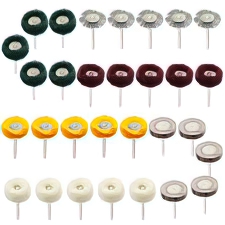
Cloth polishing brushes are constructed from layers of woven fabric secured around a central shank. The two standard varieties are white cloth and yellow cloth, and each has slightly different characteristics.
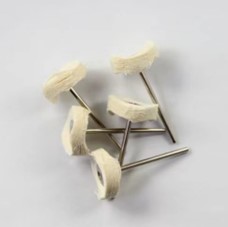
White Cloth Polishing Brushes
White cloth brushes use a softer, more loosely woven cotton fabric. The softer construction makes them well-suited for:
- Final polishing stages where a high-gloss finish is the goal
- Working with polishing compounds on precious metals
- Buffing acrylic denture surfaces to a smooth sheen
- Light finishing on thermoplastic materials
Because the fabric is relatively soft, white cloth brushes conform to curved surfaces more readily than stiffer alternatives. This makes them a good choice for polishing contoured restorations or jewelry pieces with organic shapes.
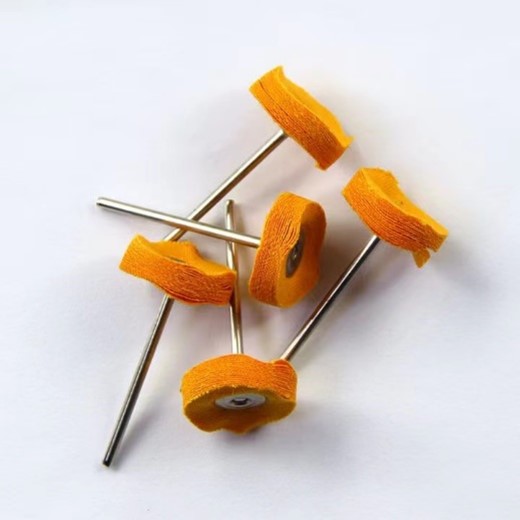
Yellow Cloth Polishing Brushes
Yellow cloth brushes are made from a denser, more tightly woven fabric that provides firmer contact with the workpiece. This added stiffness makes yellow cloth brushes preferable for:
- Initial polishing and pre-polish stages where more material removal is needed
- Grinding and polishing on harder metals such as stainless steel and chrome cobalt
- Removing light surface scratches from metal frameworks
- Smoothing rough spots on cast metal partial denture components
The denser weave also means yellow cloth brushes maintain their shape longer under pressure, making them a better option when you need consistent contact across flat or angular surfaces.
Cloth Brush Applications Beyond Dentistry
Both white and yellow cloth brushes see heavy use outside dental labs as well. Common applications include:
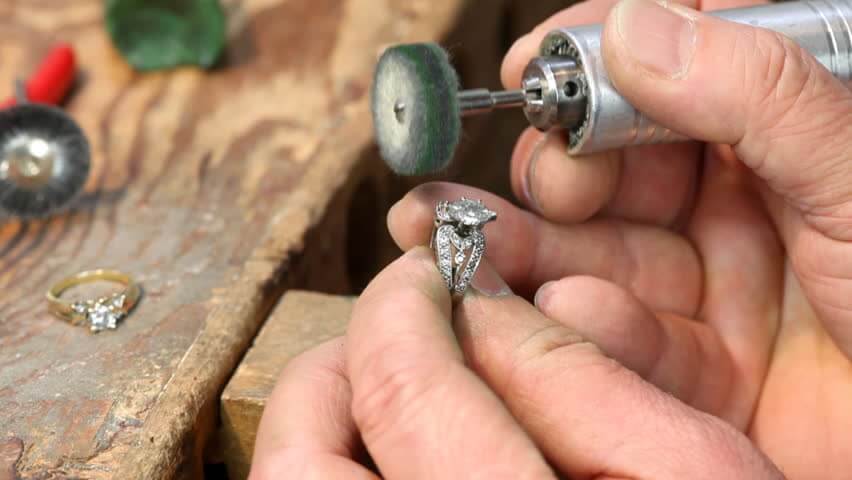
- Jewelry finishing and surface preparation for plating
- Hardware and stainless steel component polishing
- Ceramic surface smoothing
- Plastic and acrylic buffing
- Wood finishing with wax compounds
All cloth brushes are compatible with HP (handpiece) low-speed attachments and standard rotary tools, making them versatile across different equipment setups.
Understanding Goat Hair Polishing Brushes
Goat hair polishing brushes use natural animal hair bristles mounted on a shank. The inherent softness and flexibility of goat hair gives these brushes properties that synthetic and cloth materials cannot easily replicate.
Goat hair brushes are available in several color varieties, each sourced from different parts of the goat and offering slightly different bristle characteristics:
| Brush Color | Bristle Firmness | Best For |
|---|---|---|
| White goat hair | Softest | Ultra-fine polishing, final luster |
| Grey goat hair | Medium-soft | General-purpose polishing |
| Black goat hair | Medium | Pre-polish and moderate finishing |
| Chamois goat hair | Soft with slight texture | Compound application, blending |
Why Goat Hair Works So Well for Fine Polishing
Natural goat hair has several physical properties that make it effective for polishing tasks:
- Microscopic scale structure. Each hair has tiny overlapping scales that hold polishing compound against the workpiece, distributing it evenly across the surface.
- Natural flexibility. Goat hair bristles bend without breaking, allowing the brush to follow complex contours without scratching or gouging.
- Low heat generation. The softness of the bristles produces minimal friction heat, which is important when polishing heat-sensitive materials like acrylic or composite resin.
- Self-cleaning tendency. The smooth surface of natural hair sheds debris more easily than woven fabric, keeping the brush cleaner during extended use.
These qualities make goat hair brushes the preferred choice for any application where surface quality matters more than material removal speed.
Miniature Goat Hair Brushes
In addition to standard wheel-shaped brushes, goat hair polishing tools are available in miniature sizes. These smaller brushes are designed for detail work and accessing tight areas that full-size wheels cannot reach. Miniature grey and white goat hair brushes are especially popular for polishing the internal surfaces of crowns and the margins of fixed prosthetics.
Head-to-Head Comparison: Cloth vs. Goat Hair
The table below summarizes the key differences between these two brush categories:
| Characteristic | Cloth Brushes | Goat Hair Brushes |
|---|---|---|
| Material removal rate | Moderate to high | Low |
| Surface finish quality | Good (varies by weave) | Excellent |
| Durability | High, maintains shape well | Moderate, bristles wear with use |
| Heat generation | Moderate | Low |
| Compound retention | Good | Excellent |
| Conformity to contours | Moderate | High |
| Cost | Lower | Slightly higher |
| Ideal stage | Pre-polish and initial polish | Final polish and luster |
Building an Effective Polishing Sequence
The best polishing results come from using the right brush at the right stage. A typical polishing workflow in a dental laboratory might follow this sequence:
- Coarse finishing: Use tungsten carbide burs or abrasive wheels to remove gross irregularities and achieve the desired contour.
- Pre-polishing: Switch to a yellow cloth brush with a cutting compound to smooth the surface and eliminate tool marks from the previous step.
- Initial polishing: Move to a white cloth brush with a finer compound to bring the surface to a satin finish.
- Final polishing: Use a goat hair brush, either grey for general surfaces or white for the highest gloss, with a fine polishing paste to achieve the final luster.
- Inspection and touch-up: Examine the work under good lighting. Use a miniature goat hair brush for any areas that need additional attention.
This progression from aggressive to gentle ensures efficient material removal in the early stages and a defect-free finish in the later stages.
For other finishing and polishing supplies, explore our dental accessories catalog.
Care and Maintenance Tips
Proper brush care extends the life of both cloth and goat hair polishing tools:
- Dedicate brushes to specific compounds. Cross-contamination between coarse and fine compounds ruins surface finishes. Label or color-code your brushes.
- Clean after each use. Rinse cloth brushes in warm soapy water and allow them to air dry. Goat hair brushes should be gently cleaned to avoid damaging the natural bristles.
- Store properly. Keep brushes in a dry location away from dust. Storing goat hair brushes in sealed containers prevents the bristles from absorbing moisture and losing their shape.
- Replace when worn. A cloth brush with frayed or thinned fabric and a goat hair brush with sparse or broken bristles will both deliver inconsistent results. Replace them before quality suffers.
- Match speed to material. Running any polishing brush too fast generates excess heat and accelerates wear. Start at a lower RPM and increase only as needed.
To learn more about polishing brush types and their history in dental applications, see our article on the introduction of polishing brushes.
Making the Right Choice for Your Work
Neither cloth nor goat hair brushes are universally superior. Each serves a specific role in the polishing process, and using both in the correct sequence produces results that neither could achieve alone. Cloth brushes handle the heavier initial work efficiently, while goat hair brushes deliver the fine surface quality that patients and clients expect.
If you are setting up a new lab bench or restocking your polishing station, start with at least one white and one yellow cloth brush for pre-polishing, and add white and grey goat hair brushes for final finishing. This basic kit covers the majority of polishing tasks you will encounter in everyday dental laboratory work.