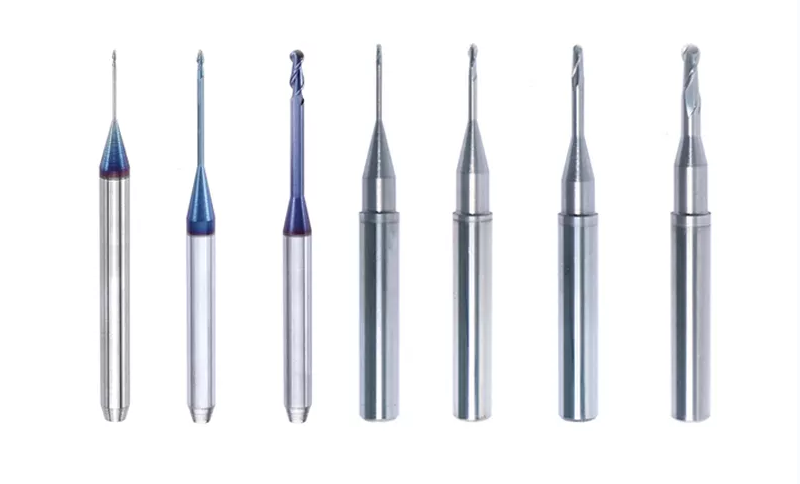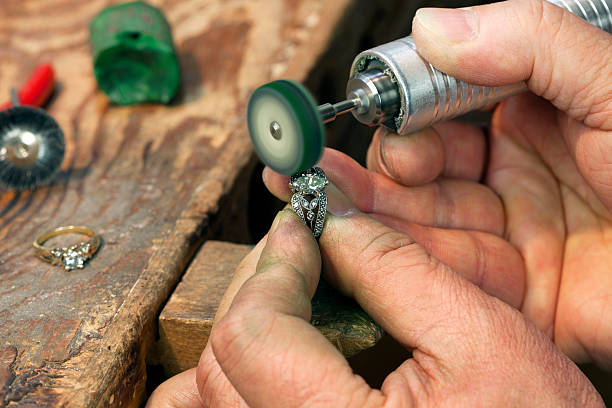
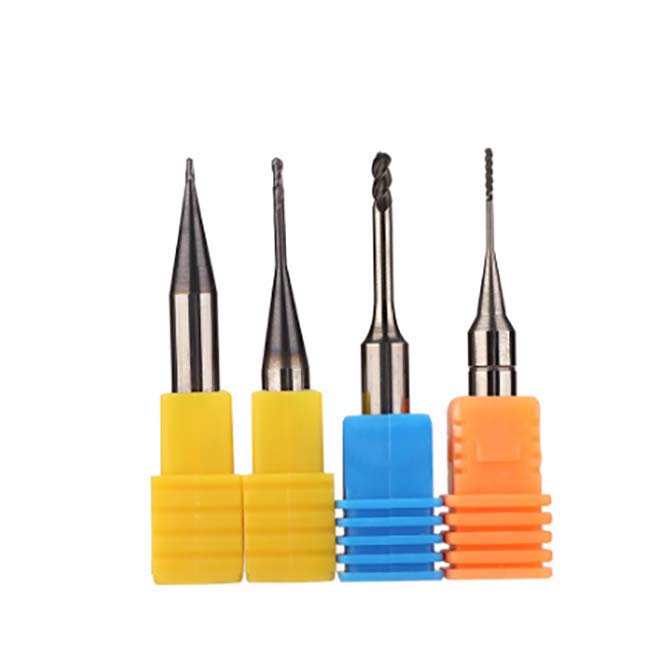
The material a milling bur is made from determines how long it lasts, how cleanly it cuts, and which restorative substrates it can handle. Two material families dominate the dental and industrial milling-bur market: high-speed tool steel (HSS) and cemented carbide. Each brings distinct advantages depending on the application, the milling machine, and the material being processed.
This article breaks down the composition, mechanical properties, and practical trade-offs of both material types so that dental technicians and lab managers can make informed purchasing decisions for their specific workflow requirements.
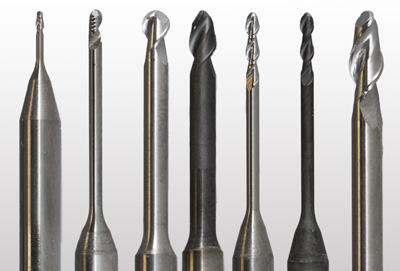
High-Speed Tool Steel (HSS) Milling Burs
High-speed steel is a family of tool steels alloyed with tungsten, chromium, molybdenum, and vanadium. These elements form hard carbide particles within the steel matrix, allowing the bur to retain a sharp cutting edge at elevated temperatures. HSS is subdivided into general-purpose grades (M2, M7) and specialty grades (M35, M42) that contain added cobalt for extra hot hardness.
Key Properties of HSS
| Property | Typical Value | Clinical Significance |
|---|---|---|
| Quenching hardness | HRC 62 - 70 | Sufficient for milling PMMA, wax, and softer composites |
| Maximum working temperature | Approximately 600 degrees C | Maintains edge stability under moderate feed rates |
| Toughness | High | Resists chipping and breakage under interrupted cuts |
| Machinability | Excellent | Complex flute geometries are easy to grind and resharpen |
Advantages of HSS Milling Burs
- Vibration resistance. The inherent toughness of HSS absorbs cutting forces well, making these burs a practical choice for older or less rigid milling machines that transmit more vibration to the tool. This property also reduces the risk of micro-fractures in delicate wax patterns during milling.
- Ease of manufacture. HSS can be forged, heat-treated, and ground with standard shop equipment. This keeps production costs lower than cemented carbide, which requires specialized sintering furnaces and diamond grinding wheels.
- Resharpening capability. When an HSS bur dulls, it can be resharpened on a standard tool grinder multiple times before the geometry degrades beyond usefulness. This extends the useful service life and reduces per-unit cost for labs processing high volumes of wax or PMMA patterns.
- Complex geometry support. Because HSS is easier to machine, manufacturers can produce burs with intricate flute designs, chip breakers, and variable helix angles that would be prohibitively expensive in carbide. This flexibility allows toolmakers to optimize flute geometry for specific substrates and machine configurations.
Limitations of HSS
Despite these strengths, HSS falls short when milling harder dental materials. Its wear resistance is significantly lower than that of cemented carbide, meaning it dulls faster when cutting zirconia, lithium disilicate, or cobalt-chromium alloys. The lower red hardness also limits the feed rates and spindle speeds that can be used without risking thermal softening of the cutting edge. In high-volume production environments, the frequent need for resharpening or replacement can offset the initial cost savings of choosing HSS over carbide.
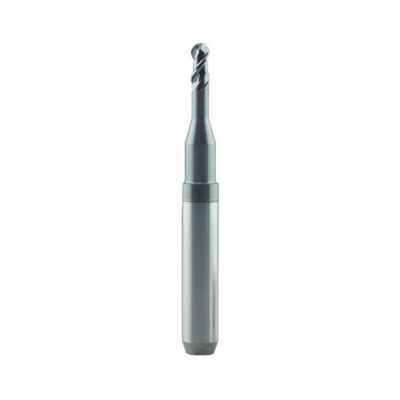
Cemented Carbide Milling Burs
Cemented carbide (also called tungsten carbide or simply "carbide") is a composite material produced through powder metallurgy. Fine particles of tungsten carbide, sometimes blended with titanium carbide, are sintered together with a cobalt binder at high temperature and pressure. The result is an extremely hard, wear-resistant tool material that outperforms HSS in most demanding milling applications.
Key Properties of Cemented Carbide
| Property | Typical Value | Clinical Significance |
|---|---|---|
| Working temperature range | 800 - 1000 degrees C | Maintains cutting performance at high spindle speeds |
| Room-temperature hardness | HRA 89 - 93 (approx. HRC 74 - 82) | Handles zirconia, glass ceramics, and CoCr alloys |
| Cutting speed capability | 4 - 8 times that of HSS | Shorter milling cycles and higher lab throughput |
| Bending strength | Lower than HSS | More susceptible to breakage under heavy interrupted cuts |
Advantages of Cemented Carbide Milling Burs
- Superior wear resistance. Carbide burs maintain their edge geometry far longer than HSS when milling abrasive materials such as pre-sintered zirconia or glass-filled composites. This translates to more consistent margin accuracy across longer production runs and fewer mid-job tool changes.
- Higher permissible cutting speeds. Because carbide retains its hardness at elevated temperatures, labs can run their CAD/CAM milling machines at faster spindle speeds and feed rates without edge degradation. The result is shorter cycle times per restoration and greater daily throughput.
- Dimensional stability. The low thermal expansion coefficient of tungsten carbide means the bur geometry changes very little during extended milling sessions, preserving the accuracy of the final prosthesis even after hours of continuous operation.
- Broad substrate compatibility. A single set of carbide milling burs can process PMMA, wax, composite resin, zirconia, lithium disilicate, and cobalt-chromium, reducing the number of tool changes required in a mixed-material lab.
Limitations of Cemented Carbide
Carbide is more brittle than HSS. Under heavy interrupted cuts or when a workpiece shifts in the fixture, a carbide bur is more likely to chip or fracture than an HSS equivalent. Carbide burs also cannot be resharpened economically in most lab settings because they require diamond grinding equipment and precise CNC-controlled reconditioning. The higher raw-material and manufacturing costs mean a greater upfront investment per bur, although the longer service life often offsets this over time when calculated on a per-unit-milled basis.
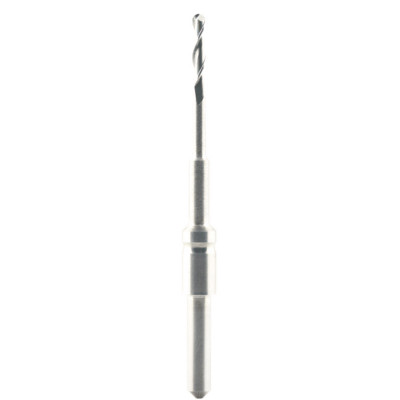
Three Categories of Cemented Carbide
Not all cemented carbides are identical. The dental and industrial tooling markets recognize three main sub-categories, each optimized for different workpiece materials:
- Tungsten-cobalt (WC-Co) carbides. The most common grade for dental milling. They offer an excellent balance of hardness and toughness and are the default choice for zirconia and PMMA milling. Most five-axis dental mills ship with WC-Co burs as standard equipment.
- Tungsten-titanium-cobalt (WC-TiC-Co) carbides. The addition of titanium carbide improves crater-wear resistance when cutting metallic substrates like cobalt-chromium or titanium. Labs that mill metal frameworks regularly benefit from this grade because it resists the adhesive wear patterns that develop at higher cutting temperatures.
- General-purpose (multi-carbide) grades. These formulations blend multiple carbide types to achieve a versatile balance suitable for mixed-material workflows where changing burs between substrates is impractical. They sacrifice peak performance in any single substrate category in exchange for acceptable results across the board.
HSS vs Cemented Carbide: Side-by-Side Comparison
| Factor | HSS | Cemented Carbide |
|---|---|---|
| Hardness | HRC 62 - 70 | HRC 74 - 82 equivalent |
| Heat tolerance | Up to 600 degrees C | Up to 1000 degrees C |
| Wear resistance | Moderate | Excellent |
| Toughness | High | Moderate |
| Resharpening | Easy, low cost | Difficult, requires diamond tooling |
| Cutting speed | Baseline | 4 - 8 times faster |
| Best substrates | Wax, PMMA, soft composites | Zirconia, glass ceramics, CoCr, PMMA |
| Unit cost | Lower | Higher (offset by longer life) |
Which Material Should You Choose?
For labs focused primarily on wax patterns, PMMA provisionals, or low-volume production, HSS milling burs offer a cost-effective starting point with forgiving toughness. For labs running high-volume zirconia, lithium disilicate, or metal-framework production on modern five-axis CAD/CAM systems, cemented carbide burs are the clear industry standard.
Many busy labs stock both types: HSS burs for roughing soft materials where breakage risk is elevated, and carbide burs for finishing passes and hard-material milling where edge retention and surface quality matter most. This dual-inventory approach balances tooling cost against production efficiency and gives technicians the flexibility to match the bur material to each specific job.
Regardless of which material you choose, proper coolant delivery and correct spindle-speed settings remain essential. Running any milling bur outside its recommended parameter window accelerates wear and compromises restoration fit. Always consult the bur manufacturer's data sheet for substrate-specific speed and feed recommendations.
Burdental supplies both tungsten carbide burs and a full range of laboratory diamond burs engineered for today's digital milling workflows. Every bur is manufactured under strict dimensional tolerances and tested for cutting performance before leaving the factory, ensuring consistent results across the entire product line.