Polishing is one of the final and most important steps in dental laboratory work. Whether you are finishing a denture base, smoothing an acrylic partial, or bringing a high shine to a metal framework, the polishing brush or wheel you choose directly affects surface quality. Bristle and cotton cloth polishing brushes are among the most widely used tools in dental labs worldwide because they are affordable, effective, and available in many configurations.
This article covers the different types of bristle and cotton cloth polishing brushes and wheels, explains how to select the right one for each task, and provides practical guidance on cleaning and maintenance.
What Are Bristle and Cotton Cloth Polishing Brushes?
Bristle and cotton cloth polishing brushes are rotary instruments used on bench lathes and handpieces to smooth, finish, and polish dental prostheses and laboratory models. They come in two broad material categories.
Bristle Brushes
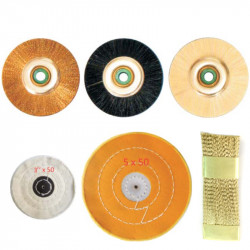
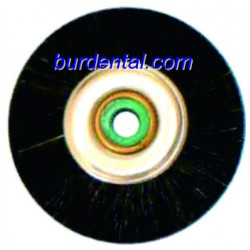
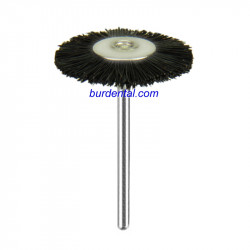
Bristle brushes are made from natural animal hair, most commonly Chungking bristle (a stiff hog hair from China known for its durability and spring). Black bristle is stiffer and more aggressive, making it suitable for initial polishing and compound application. White goat hair is softer and better suited for final finishing where a high luster is needed without surface scratching.
Cotton Cloth Brushes
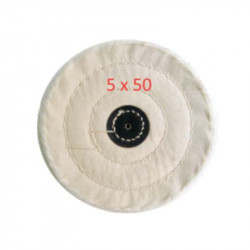
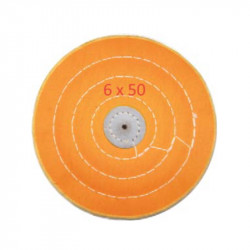
Cotton cloth polishing wheels are made from layers of woven cotton fabric stitched or folded together. White cotton produces a softer, more uniform polishing action, while yellow cotton is slightly stiffer and more durable under heavy use. Cotton wheels excel at holding polishing paste and delivering a smooth, mirror-like finish on acrylic and metal surfaces.
Shapes and Mounting Options
Polishing brushes and wheels come in several shapes, each designed for different access requirements and surface geometries. Understanding these shapes helps you pick the right tool for each polishing task.
| Shape | Description | Best Use |
|---|---|---|
| Wheel (unmounted) | Flat disc with center hole; mounts on a lathe spindle or mandrel | Large flat and convex surfaces on dentures and models |
| Wheel (mounted with shank) | Wheel with integrated HP shank for straight handpiece | Chairside or small-bench polishing where a lathe is unavailable |
| Cup / Bowl | Concave shape that wraps around convex surfaces | Polishing the outer surfaces of crowns, pontics, and rounded frameworks |
| Pen / Pencil | Narrow cylindrical shape on a shank | Reaching into tight interproximal areas and internal surfaces |
Unmounted wheels require a mandrel to attach them to the lathe. When ordering, confirm the inner diameter of the wheel matches your mandrel size. Standard inner diameters are typically 6mm, 8mm, or 10mm for bench lathe applications.
Layer Thickness and Its Effect on Performance
Both bristle and cotton cloth wheels are available in different thicknesses, usually measured by the number of layers.
- 1-layer wheels are thin and flexible. They conform well to irregular surfaces and are ideal for detail polishing in areas with complex anatomy.
- 2-layer wheels offer a balance of flexibility and rigidity. They are the most popular general-purpose choice for everyday lab polishing.
- 3- to 4-layer wheels are thicker and stiffer. They remove material faster and maintain their shape under pressure, making them suitable for high-volume production polishing or initial smoothing of rough surfaces.
Thicker wheels also last longer before they need replacement, which can reduce consumable costs in busy laboratories. However, they sacrifice some ability to reach concavities and undercuts, so most labs keep a range of thicknesses on hand.
Common Applications in Dentistry
Bristle and cotton cloth polishing brushes serve a wide variety of tasks across the dental lab and, in some cases, at the chairside. Here are the primary applications.
Denture and Acrylic Polishing
After contouring a denture base with tungsten carbide burs and finishing with abrasive points, dental technicians use bristle brushes with pumice slurry for pre-polishing. A cotton cloth wheel with high-shine polishing paste then brings the acrylic to a smooth, glossy surface that resists plaque adhesion and feels comfortable against oral mucosa.
Metal Framework Finishing
Chrome-cobalt and nickel-chromium partial denture frameworks require thorough polishing before delivery. Black bristle wheels loaded with tripoli compound cut through light surface oxidation and tool marks. A follow-up pass with a clean cotton wheel and rouge compound produces the final mirror finish.
Ceramic and Porcelain Polishing
While dedicated silicone rubber polishers are preferred for intraoral ceramic adjustment, lab-side pre-glazing polish is often done with soft goat hair brushes and diamond polishing paste. The gentle action of natural bristle minimizes the risk of micro-fractures in the ceramic surface.
Model and Die Trimming
Plaster and stone models sometimes need light surface smoothing before impression or wax-up work. A soft bristle brush at low speed removes loose particles and smooths rough spots without altering the model dimensions.
Jewelry and Other Uses
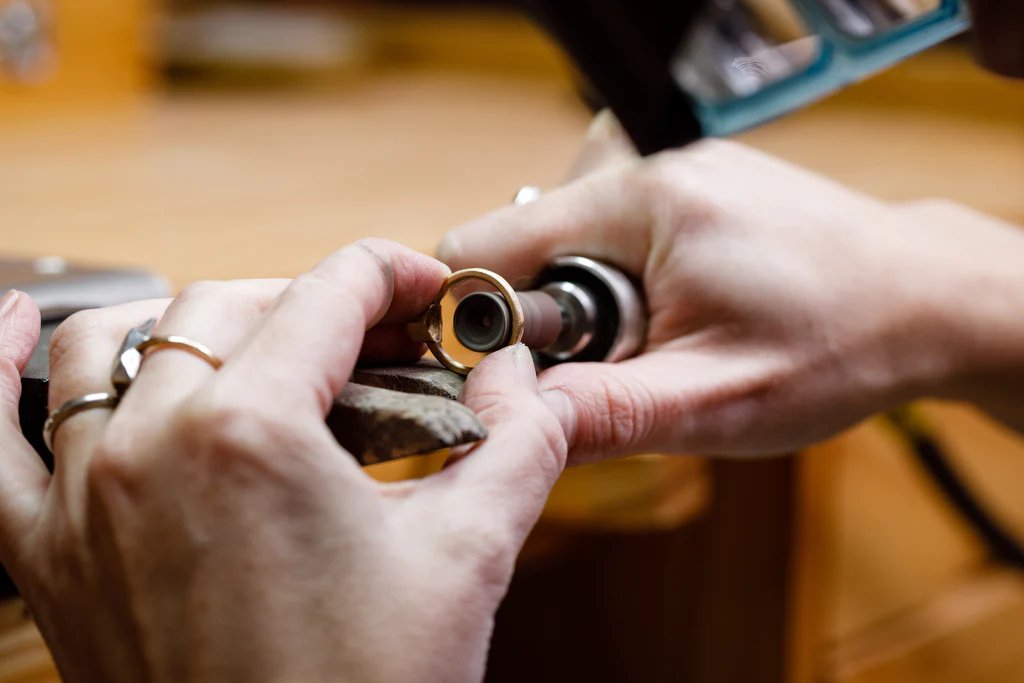
Outside dentistry, the same bristle and cotton cloth wheels are widely used in jewelry making, watchmaking, and general metalwork. Their ability to hold polishing compounds and deliver consistent surface finishes makes them a staple across precision polishing industries.
Selecting the Right Brush for Your Task
Choosing between bristle and cotton cloth depends on the stage of polishing and the material being worked on. The following guide simplifies the decision.
| Polishing Stage | Recommended Brush | Compound |
|---|---|---|
| Initial smoothing (pre-polish) | Black bristle (stiff) | Pumice slurry or tripoli |
| Intermediate polishing | White bristle (medium) | Fine pumice or universal paste |
| Final high-shine polishing | Cotton cloth wheel | Rouge, high-shine paste, or diamond paste |
| Interproximal cleaning | Chungking bristle pen shape | Light pumice or dry |
Always apply polishing compound to the brush rather than directly to the workpiece. This ensures even distribution and prevents compound buildup in surface grooves. For a broader overview of polishing instruments, see our article on dental polishers and their uses.
How to Clean a Polishing Wheel
Polishing compound builds up in the fibers of bristle and cotton wheels over time, reducing their effectiveness and potentially contaminating workpieces with old compound residue. Regular cleaning extends the life of your brushes and maintains consistent polishing results.
- Use a wheel rake. A wheel rake is a metal tool with a serrated or spiked edge. With the lathe running at low speed, hold the rake firmly against the face of the spinning brush. Move it slowly back and forth across the full width of the wheel. The teeth pull out embedded compound and restore the bristles or cotton fibers to a fluffy, open state.
- Brush out loose debris. After raking, stop the lathe and use a stiff hand brush to remove any remaining loose material from the wheel face and edges.
- Wash if heavily contaminated. For cotton cloth wheels with deep compound buildup, soak the wheel in warm water with a mild detergent for 15 to 20 minutes. Rinse thoroughly, squeeze out excess water, and allow the wheel to air dry completely before reuse. Do not use harsh solvents, as they can weaken the cotton fibers.
- Dedicate wheels to specific compounds. To avoid cross-contamination, label or color-code your wheels so that each one is used with only one type of polishing compound. Never use a tripoli wheel for rouge finishing, and vice versa.
Storage and Replacement Tips
Store polishing brushes and wheels in a dry, dust-free cabinet. Moisture encourages mold growth on natural bristle, and dust particles embedded in cotton cloth can scratch polished surfaces. Replace any wheel that shows uneven wear, torn fabric layers, or bristles that have become permanently flattened and no longer spring back when pressed.
For labs that go through polishing wheels regularly, buying in bulk reduces per-unit cost and ensures you always have fresh wheels available. Keeping a stock of multiple sizes and thicknesses prevents workflow interruptions when a worn wheel needs to be swapped out mid-case.
Frequently Asked Questions
Can I use the same polishing brush for acrylic and metal?
It is best to use separate brushes for different materials. Polishing compounds designed for metal can be too aggressive for acrylic, and residual metal particles in the brush can scratch softer materials. Dedicate specific wheels to each material type.
What speed should I run the lathe for polishing?
For bristle brushes with pumice, speeds between 1,500 and 2,500 RPM work well. Cotton cloth wheels for final polishing perform best at slightly higher speeds, around 2,500 to 3,500 RPM. Always use light pressure and let the compound and brush do the work. If you experience vibration or uneven results, check that the wheel is properly balanced and the lathe spindle is clean.
How often should I replace polishing wheels?
There is no fixed replacement schedule. Inspect your wheels before each use. Replace them when bristles become matted, cotton layers separate, or the wheel no longer holds compound effectively. A well-maintained wheel can last several weeks in a moderately busy lab.